Tag: HF radio

  • The Radio of the Future: AI in the Shack, and How Soon Icom and Yaesu Ship One

    The Radio of the Future: AI in the Shack, and How Soon Icom and Yaesu Ship One

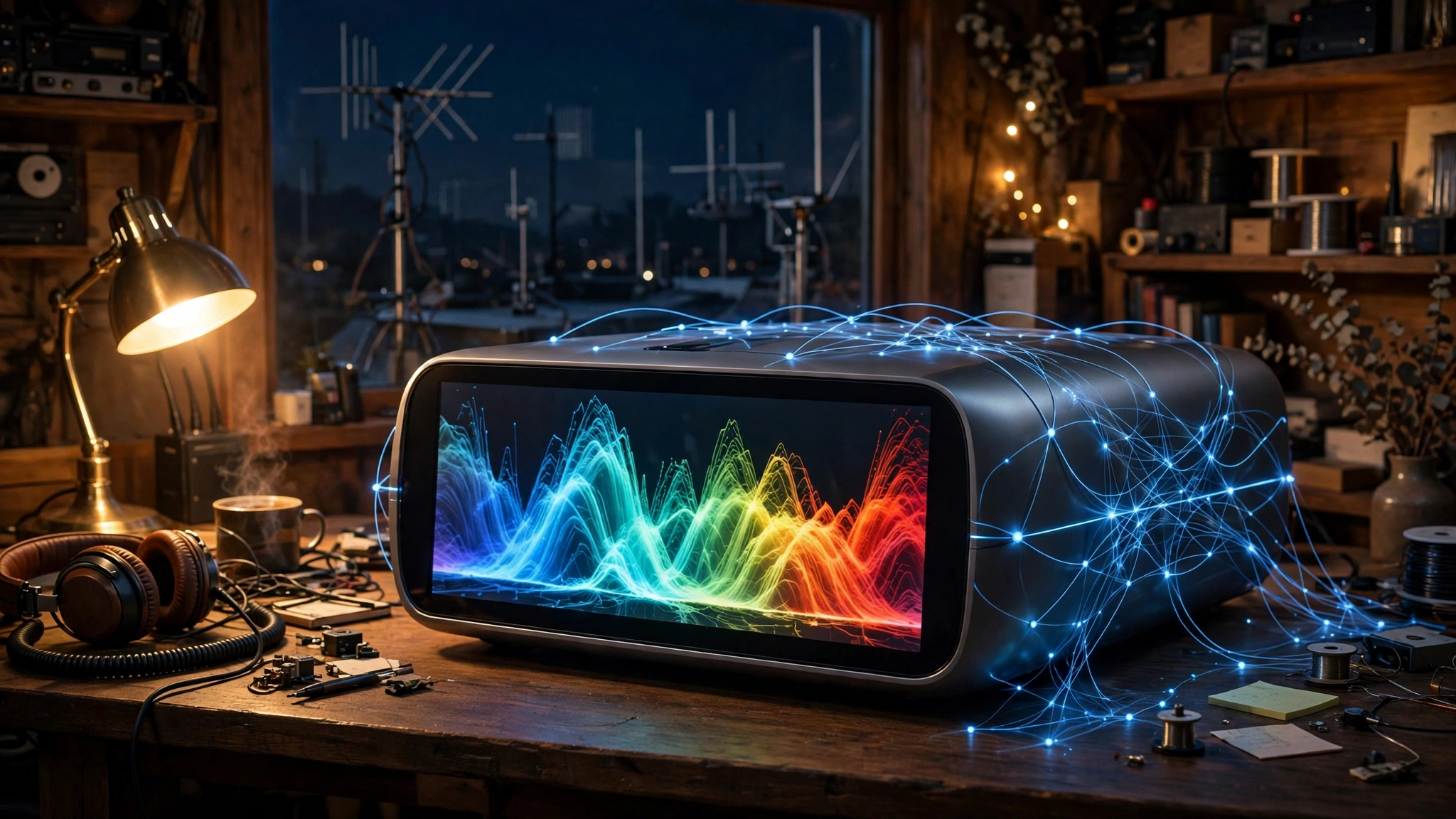
    Ask a room of hams what the radio of the future looks like and you’ll start an argument. No knobs at all? A radio that finds the DX for you? Here’s my take, from a shack full of radios spanning forty years of design: the radio of the future isn’t a different box. It’s the same box with a brain — AI integrated into the receiver, AI optimizing your settings on every band, all the time, in the background.

    And here’s the part that surprises people: pieces of it are already here.

    What “AI in a radio” actually means

    Forget the science-fiction version. In a transceiver, AI means software that was trained on real signals instead of programmed with fixed rules. Old noise reduction follows a formula: if the audio looks like this, cut that. A trained neural network has listened to thousands of hours of SSB and CW, learned what a human voice and a dit actually look like buried in noise, and rebuilds the signal you meant to hear. It’s the difference between a filter and an experienced operator riding the controls.

    Applied across the whole radio, that one idea grows into a list:

    • AI noise reduction that separates voice from static the way your brain does, only faster
    • Automatic optimization on every band — the radio watches the noise floor and band conditions and sets AGC, filtering, preamp and attenuation for this band, right now, not a preset you saved last season
    • Signal recognition — the radio labels what it hears: that’s SSB, that’s CW at about 20 WPM, that’s FT8, that’s a birdie from your neighbor’s solar inverter
    • A tuner and amplifier that learn your antennas, band by band, instead of hunting from scratch every time
    • A co-pilot for operating — spotting the opening, suggesting the band move before the pileup figures it out
    Waterfall display with highlighted signals

    The future is already shipping — quietly

    Here’s what most hams miss: nobody launched “the AI radio” with a big announcement. AI arrived the way it always arrives in this hobby — one feature at a time.

    Software-defined radios got it first, because an SDR is a computer and a computer can run a neural network. FlexRadio’s current SmartSDR software includes an AI noise reduction built on a recurrent neural network, sitting in the DSP chain next to the traditional algorithms — and its AGC can already set its own threshold automatically by measuring the noise floor beside your slice. I own one of those radios. The future is literally on my shelf; it just didn’t come in a box labeled “AI.”

    Outside the radio, hams got there even sooner. AI noise-filtering services already take your receiver’s audio, clean it on a server in real time, and hand you back SSB and CW with the noise stripped out — trained on recordings of actual amateur traffic, including recordings operators submitted of their own noise at their own stations. Third-party control software for Icom rigs now adds AI noise reduction and automatic signal classification on top of radios that shipped without either. The aftermarket is bolting AI onto yesterday’s radios while the factories take notes.

    So how soon do Icom and Yaesu ship “the AI radio”?

    Now the prediction — and I’ll give you the honest reasoning instead of a guess pulled from the air.

    The big Japanese makers move carefully, on long product cycles, and they don’t bet a flagship on unproven software. But they also don’t ignore a feature a competitor is selling. Watch the sequence that has already started: AI noise reduction appears in SDR platforms and in software first, because software can be updated. Then it becomes a checklist feature — the thing a review mentions and a buyer asks about at the hamfest. Once it’s a checklist feature, no flagship ships without it.

    So my call: the first radios marketed as AI radios from the big makers arrive within one product generation — and they’ll lead with AI receive processing, because that’s where the technology is already proven. A radio that continuously optimizes its own settings across all bands — the full vision — is one generation behind that. Not because the technology is far off, but because factories ship features in the order they can prove them: ears first, then hands, then judgment.

    And notice who has the head start. The SDR makers can add AI with a software update to radios already in your shack. The traditional makers have to build it into the next box. That gap — update versus new model — is the real race.

    What it won’t change

    An AI radio still needs an antenna, and it will still hear the noise your antenna hears. It won’t fix common-mode noise on your feedline, it won’t quiet a bad power supply, and it won’t teach a new ham to listen. What it does is give every operator the equivalent of forty years of knob sense — the settings a veteran would have chosen, chosen instantly, on every band. The skill in this hobby was never really in the knobs. It was in knowing why. That’s still yours.

    73, Roger — NJ2RQ
  • Xiegu X6100: A Feature-Packed Portable HF & 6-Meter SDR for POTA and QRP

    Xiegu X6100: A Feature-Packed Portable HF & 6-Meter SDR for POTA and QRP

    Small enough to take along, yet packed with the sort of features that make portable operating fun, the Xiegu X6100 deserves a serious look from anyone interested in QRP, POTA, or a compact HF station.

    Disclosure: The Radioddity product link in this article contains my referral identifier. A purchase through it may support this blog. Product availability, pricing, and coupon eligibility can change.

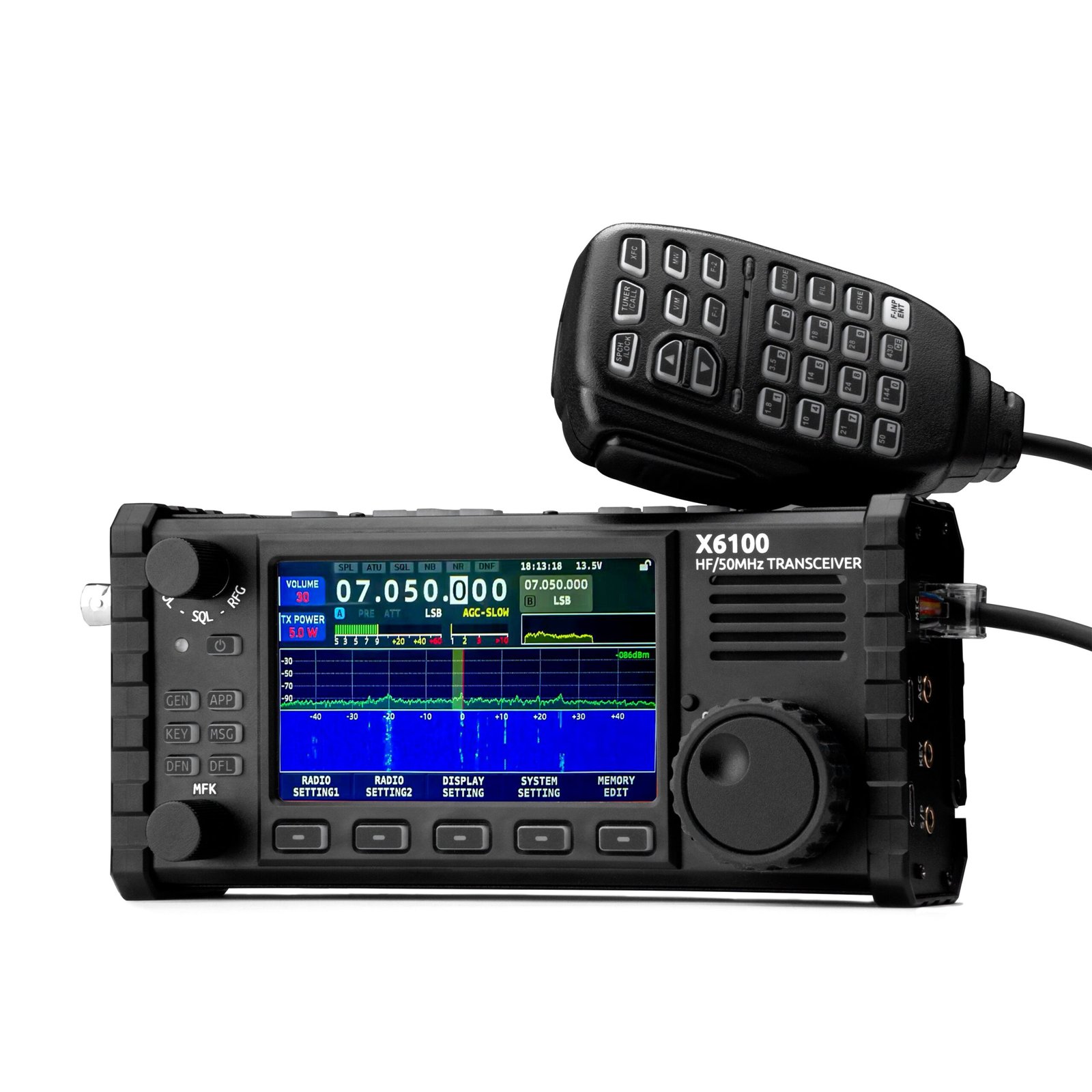
    Real Radioddity product photograph of the Xiegu X6100 SDR radio and included speaker microphone
    Actual Xiegu X6100 product photograph courtesy of Radioddity (not AI-generated).

    A full-featured radio that is ready for the field

    The appeal of the Xiegu X6100 is simple: it combines an HF and 6-meter software-defined transceiver, an internal rechargeable battery, and an automatic antenna tuner in one remarkably compact package. For operators who enjoy getting on the air from a picnic table, park, campground, hotel, or home operating desk, having fewer separate components to pack is a genuine advantage.

    And it does not feel like a stripped-down field radio. The bright 4-inch color display shows radio information along with a live spectrum and waterfall view, helping operators see activity across the band instead of searching blindly. The physical controls and tuning knob also make the X6100 appealing to hams who want a hands-on operating experience rather than relying entirely on a connected computer.

    Seven reasons the X6100 is worth considering

    1. HF plus 6-meter coverage

    The X6100 supports the amateur HF bands and 50 MHz, with modes including SSB, CW, AM, FM, and RTTY. That gives voice enthusiasts, CW operators, and digital-mode experimenters a versatile platform in a small footprint. As always, transmit only on bands and frequencies authorized by your license.

    2. A built-in battery for true grab-and-go operating

    A 3,000 mAh rechargeable lithium battery is built in. There is no need to connect a separate battery just to power up for a short session. Radioddity specifies up to 5 watts on the internal battery and up to 10 watts with an appropriate external DC supply. For QRP operators, that is a useful combination of portability and flexibility.

    3. Automatic antenna tuner already included

    Portable operators know that antenna setup is often the most time-consuming part of getting on the air. The integrated ATU can help match a suitable portable antenna without having to pack a separate tuner. It does not replace a properly installed antenna, but it can greatly simplify field setup.

    4. A real-time spectrum display and waterfall

    One of the X6100’s standout features is the 4-inch, 800 × 480 color screen. Seeing signals across the band is useful when scouting for activity, looking for a clear operating frequency, or simply enjoying the SDR experience. In a radio this compact, that visual feedback is a welcome feature.

    5. More than one way to operate

    SSB voice, CW, and data-mode capability make this an attractive choice for operators who like variety. The X6100 incorporates digital signal processing and supports USB-based control and data functions. As with other radios, specific digital-mode workflows may call for software setup and appropriate connections.

    6. Connectivity and room to experiment

    Radioddity lists Bluetooth, Wi-Fi, USB connectivity, and USB host capability among the X6100’s features. These are especially appealing to experimenters who enjoy exploring different operating setups, accessories, and computer integration.

    7. Compact enough to make portable radio more spontaneous

    At approximately 7.1 × 3.4 × 2 inches, the radio is easy to picture in a POTA bag alongside a wire antenna and a few essentials. A compact station is one you may be more likely to take outside and use. That is part of the magic of portable amateur radio.

    Where the X6100 really shines

    The X6100 makes particular sense for Parks on the Air (POTA), camping, travel, emergency communications practice, and QRP experimentation. Its combination of battery power, tuner, multi-mode capability, and waterfall display checks many boxes that portable operators care about. It can also serve as an enjoyable secondary radio for an established ham shack.

    There is one important expectation to set: the X6100 is a low-power transceiver, not a 100-watt base radio. Antenna efficiency and operating conditions matter a great deal at 5–10 watts. But that is also part of the satisfaction of QRP: making a contact with a modest station can be especially rewarding.

    Special Radioddity discount: use MASONICHAM

    Looking to add the X6100 to your station? Visit Radioddity using the link below and enter the coupon code MASONICHAM at checkout to check the available discount. The final savings and eligibility, including whether the code combines with an existing promotion, are determined at checkout.

    Shop the Xiegu X6100 at Radioddity — use coupon code MASONICHAM

    For hams who appreciate a portable SDR with a built-in battery, an automatic tuner, a useful screen, and a flexible selection of modes, the Xiegu X6100 is a compelling little radio. It brings a lot of operating possibilities together without requiring a large station to come along for the ride.

    73!
    NJ2RQ — LuffyHamVault