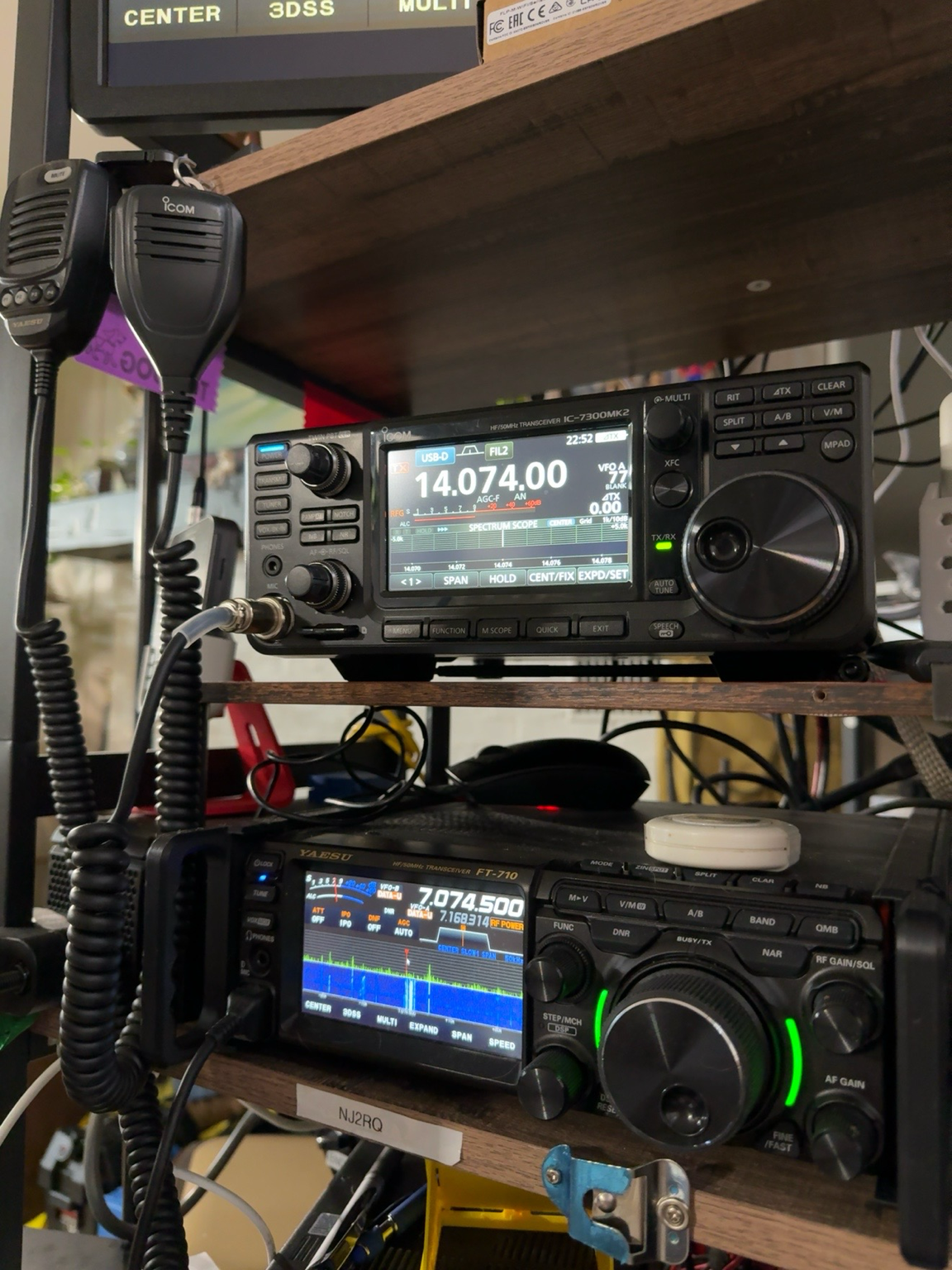
Emergency preparedness is one of those subjects that is easy to put off until the weather turns bad, the power goes out, or an evacuation order arrives. Amateur radio operators already think about communications, backup power, antennas, and redundancy, but a useful emergency kit has to cover much more than the radio.
With the West Essex Amateur Radio Club hosting a special Zoom presentation on emergency preparation and go bags on Wednesday, October 21 at 7:30 PM, this is a good time to review what a practical kit should contain and how a ham-radio operator can build on the basics.
Start With the Emergency Basics
Before adding radios, coax, batteries, and adapters, the kit has to take care of the people carrying it. Current American Red Cross and Ready.gov guidance centers on several days of basic supplies. That includes water, shelf-stable food, a flashlight, first-aid supplies, medications, sanitation items, important documents, a radio for receiving emergency information, and backup power for phones and other devices.
The Red Cross recommends a go-kit that can support an evacuation for at least three days, while a stay-at-home kit should be larger and capable of supporting the household for a longer period. Water is especially important: the standard planning figure is one gallon per person per day for drinking and sanitation.
Do Not Make One Giant Bag
A common mistake is trying to put everything into one enormous backpack. A better approach is to think in layers.
- Personal go bag: essentials you can carry immediately.
- Vehicle kit: additional food, water, clothing, charging equipment, tools, and heavier radio gear.
- Home emergency kit: larger reserves of food, water, medications, batteries, lighting, and household supplies.
- Radio deployment kit: equipment specifically intended for communications support, field operations, or emergency-service assignments.
This keeps the most important gear portable while still allowing you to maintain deeper reserves at home or in the vehicle.
The Ham Radio Layer
For an amateur radio operator, communications capability can be added without turning the kit into a portable radio store. The goal should be reliable, simple equipment that you already know how to use.
A practical radio section can include a charged VHF/UHF handheld, a spare battery, a charging cable, an external antenna, and a printed frequency list. Depending on the assignment and the size of the kit, you may also want a mobile or portable HF radio, a compact tuner, coax, and a portable antenna system.
The most important rule is familiarity. An emergency is not the time to learn a complicated new radio menu or discover that a programming cable does not work.
Power Is Usually the Weak Link
Radios are only useful while they have power. That means the go bag should include a realistic charging plan, not just one battery.
- Spare handheld batteries or AA/AAA backup options if supported.
- USB power bank for phones and small devices.
- 12-volt LiFePO4 battery for larger radios when appropriate.
- Anderson Powerpole adapters if that is your station standard.
- 12-volt vehicle charging cable.
- AC charger for use when commercial power is available.
- Small solar charging option for extended outages, if practical.
Label cables and adapters. During an emergency, a bag full of nearly identical black cords is not helpful. For a deeper look at sizing batteries for 100-watt HF operation, see Portable Power for Ham Radio: How Many Amp-Hours Do You Really Need?
Quick Go-Bag Check Before You Zip It Up
- Water, food, medications, first aid, sanitation, identification, and emergency contacts are packed.
- Phone and USB power bank are charged.
- Handheld radio is charged and a spare battery is included.
- Repeater, simplex, and emergency frequencies are available on paper.
- Radio, antenna, feed line, adapters, and power cables have been tested together.
- Flashlight and spare batteries work.
- The bag can actually be carried comfortably.
- Expiration dates and battery condition have been checked.
Antennas and Feed Line
A handheld’s rubber antenna may be fine for a nearby repeater, but emergency communications often improve dramatically with a better antenna. A roll-up dual-band antenna, small magnetic-mount antenna, or compact mast-supported antenna can make a major difference.
If HF capability is part of your plan, choose an antenna you can deploy quickly and repeatably. A lightweight end-fed antenna, portable vertical, or compact loaded vertical can work, but only if you have practiced setting it up before you need it. For a practical comparison, see End-Fed, Vertical or Hamstick? Choosing the Right Portable HF Antenna.
Information Matters as Much as Equipment
A printed reference sheet can be one of the most useful items in the bag. Include local repeaters, simplex frequencies, emergency nets, important telephone numbers, family contacts, and any ARES, RACES, CERT, Red Cross, or club information relevant to your area.
Keep a paper copy because a phone can be damaged, discharged, or unavailable. A small notebook and pencils are also useful for logging messages, frequencies, locations, and instructions. If you plan to use digital messaging when normal communications are disrupted, review Winlink Made Easy: Installation, Configuration and Your First Message.
Medical, Personal, and Family Needs
Emergency kits have to reflect the people who will actually use them. Prescription medications, eyeglasses, hearing-aid batteries, mobility needs, pet supplies, identification, insurance information, and emergency contact information may be more important than any radio accessory.
Review expiration dates regularly and keep a current medication list with the kit. Important documents can be stored as paper copies in a waterproof pouch, with encrypted digital copies as an additional backup.
Practice Before the Emergency
The best go bag is one that has been tested. Carry it. Open it. Set up the antenna. Power the radio. Check into a repeater. Charge the phone from the backup battery. Confirm that the flashlight works. Make sure the food is still within date and the medications are current.
If the bag is too heavy to carry comfortably, reduce it or split it into layers. If an item requires a manual every time you use it, practice with it until it becomes familiar or replace it with something simpler.
Upcoming West Essex Amateur Radio Club Presentation
Kevin Wu, KD2RME, of the West Essex Amateur Radio Club will present a comprehensive program on emergency and disaster preparedness on Wednesday, October 21 at 7:30 PM. The program will cover potential disaster scenarios, mitigation, family preparation, different types of emergency kits, portability, and how amateur radio can support communications, weather awareness, and situational awareness.
Zoom: Join the October 21 presentation
West Essex Amateur Radio Club: wearc.org
Final Thought
Emergency preparedness is not about trying to predict every disaster. It is about giving yourself options. A well-planned go bag, a practiced communications setup, dependable backup power, and a family plan can make a difficult situation much easier to manage.
For the ham operator, the radio is an important tool—but it is only one part of being prepared.
References: Ready.gov Emergency Supply Kit and American Red Cross Survival Kit Supplies.