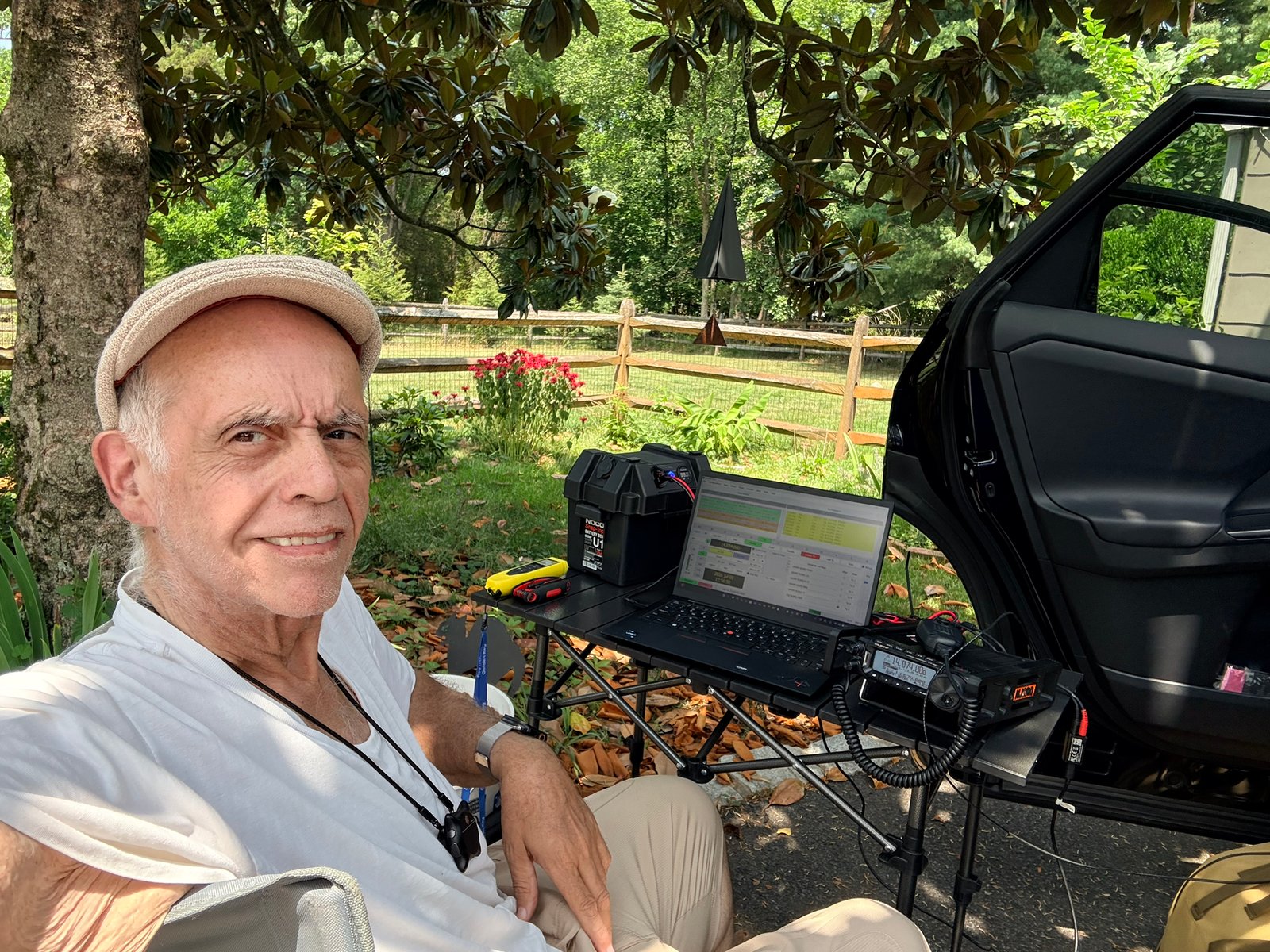
Tag: QRP

  • I Own Ten HF Radios. Here’s What Each One Is Actually For — and the One I’d Keep

    I Own Ten HF Radios. Here’s What Each One Is Actually For — and the One I’d Keep

    Every ham who visits my shack asks the same question: “Why do you need ten HF radios?” Fair question. The honest answer is that each one does a job the others don’t — and if you’re choosing your first HF rig, or your next one, understanding those jobs matters more than any spec sheet. So let’s walk the tower, shelf by shelf, and I’ll tell you what each class of radio is really for.

    The software-defined flagship: FlexRadio FLEX-6500

    The FLEX is a computer that happens to transmit. No big front panel — the radio lives in software, which means I can run it from another room or another state, watch whole bands at once on a panadapter, and slice the spectrum into separate receivers. The lesson: an SDR teaches you to see the band, not just hear it. Once you’ve watched signals instead of hunting for them blind, there’s no going back.

    The modern daily driver: Icom IC-7300MK2

    This is the radio that gets switched on first. Direct-sampling SDR in a traditional box, with knobs where your hands expect them and a waterfall on the front panel. The lesson: this class of rig is the answer for most new Generals. One box, every HF band, phone, CW and digital with a single USB cable. If a new ham asks me what to buy first, the conversation starts here.

    The challenger: Yaesu FT-710 AESS

    Yaesu’s answer to the same idea — an SDR with a big, bright display and acoustic enhancement aimed at pulling weak voices out of the noise. The lesson: Icom and Yaesu solve the same problem with different philosophies. Neither is “wrong.” Your ears and your hands decide, which is why you should always try a rig before you buy one.

    The Swiss Army knife: Icom IC-706MKIIG

    HF, VHF and UHF in one small box, with a detachable face made for a dashboard. Mine has lived the mobile life. The lesson: an all-band, all-mode mobile rig is the most flexible radio a ham can own. It won’t beat a dedicated HF rig on receive, but it will be there — in the car, at the park, at the emergency operations center — when the big rigs are home on the bench.

    The field radios: Yaesu FT-891 and FT-817

    The FT-891 is 100 watts in a box built to travel — the POTA and portable-workhorse class. The FT-817 is its opposite: 5 watts of QRP, every band, running on batteries. The lesson: portable operating teaches skills the home station hides. When you have 5 watts and a wire in a tree, antenna craft and operating technique stop being theory. Every ham should run QRP at least once; it will make you better at 100 watts.

    The workhorses: Yaesu FT-450D

    A straightforward, no-drama HF rig — the class of radio that fills club stations and serves as a thousand hams’ first HF. The lesson: you do not need a waterfall to work the world. A solid, simple rig and a decent antenna have made more contacts than any flagship ever built.

    The new generation portable: Yaesu FTX-1 Field

    Part of the newest wave — modular, battery-ready, built for the field from the first sketch. The lesson: the hobby keeps moving toward radios that leave the shack. Parks, summits, campgrounds — the shack is wherever you set up.

    Icom IC-756PROIII HF transceiver
    The pre-SDR flagship — Icom IC-756PROIII.

    The flagship of the pre-SDR era: Icom IC-756PROIII

    Before direct-sampling SDRs took over, this was what a serious station looked like: a big, heavy flagship with a real-time spectrum scope, dual watch, twin passband tuning, and a front panel built like it meant business. The lesson: the PROIII generation is the bridge between the analog past and the SDR present. It taught a whole era of hams to operate by scope as well as by ear — and a clean one still holds its own on the bands today. If you want to understand why modern rigs look the way they do, spend an evening with the radio they were answering.

    The elder: Yaesu FT-7B

    A vintage analog rig from another era — no menus, no firmware, just knobs, meters and honest circuits. The lesson: the old radios teach you what the new ones hide. When there’s no processor between you and the signal, you learn radio the way the hams before us did. And a cared-for classic still works the bands today — which tells you something about how long good gear lasts.

    So — the one I’d keep

    If the tower had to go down to a single radio, I’d keep the IC-7300MK2. Not because it’s the most expensive or the most exotic, but because it covers the most ground for the most operating: every band, every mode, simple digital hookup, and a front panel a visiting ham can sit down at and use in five minutes. The FLEX is more powerful. The 817 is more fun per watt. But the daily driver is the one that never makes you think about the radio instead of the contact.

    Close-up of the working shack shelf with Yaesu FT-710 and Icom IC-706MKIIG transceivers
    The working shelf — FT-710, IC-706MKIIG and the tuners that keep them honest.

    What I learned / what to try

    • You don’t need ten radios. You need one that matches how you operate — home, mobile, portable, or digital.
    • Buy for the job, not the spec sheet. A radio that leaves the house beats a better radio that doesn’t.
    • Whatever you buy, keep it clean, keep the manual, keep the box. Good gear holds its value — and its next owner will thank you.

    What’s the one radio in your shack you’d never sell? Tell me in the comments.

    73 de NJ2RQ
  • Xiegu X6100: A Feature-Packed Portable HF & 6-Meter SDR for POTA and QRP

    Xiegu X6100: A Feature-Packed Portable HF & 6-Meter SDR for POTA and QRP

    Small enough to take along, yet packed with the sort of features that make portable operating fun, the Xiegu X6100 deserves a serious look from anyone interested in QRP, POTA, or a compact HF station.

    Disclosure: The Radioddity product link in this article contains my referral identifier. A purchase through it may support this blog. Product availability, pricing, and coupon eligibility can change.

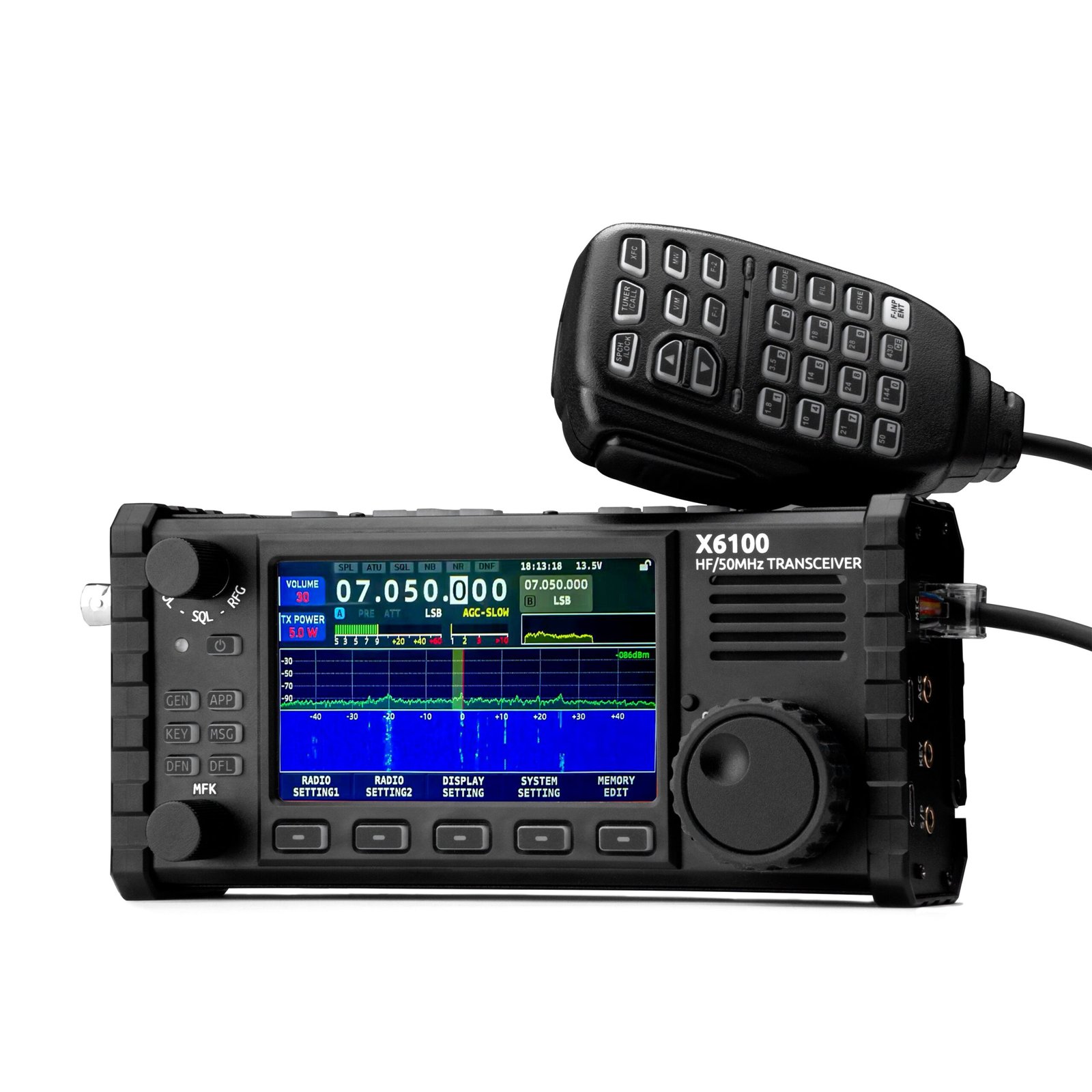
    Real Radioddity product photograph of the Xiegu X6100 SDR radio and included speaker microphone
    Actual Xiegu X6100 product photograph courtesy of Radioddity (not AI-generated).

    A full-featured radio that is ready for the field

    The appeal of the Xiegu X6100 is simple: it combines an HF and 6-meter software-defined transceiver, an internal rechargeable battery, and an automatic antenna tuner in one remarkably compact package. For operators who enjoy getting on the air from a picnic table, park, campground, hotel, or home operating desk, having fewer separate components to pack is a genuine advantage.

    And it does not feel like a stripped-down field radio. The bright 4-inch color display shows radio information along with a live spectrum and waterfall view, helping operators see activity across the band instead of searching blindly. The physical controls and tuning knob also make the X6100 appealing to hams who want a hands-on operating experience rather than relying entirely on a connected computer.

    Seven reasons the X6100 is worth considering

    1. HF plus 6-meter coverage

    The X6100 supports the amateur HF bands and 50 MHz, with modes including SSB, CW, AM, FM, and RTTY. That gives voice enthusiasts, CW operators, and digital-mode experimenters a versatile platform in a small footprint. As always, transmit only on bands and frequencies authorized by your license.

    2. A built-in battery for true grab-and-go operating

    A 3,000 mAh rechargeable lithium battery is built in. There is no need to connect a separate battery just to power up for a short session. Radioddity specifies up to 5 watts on the internal battery and up to 10 watts with an appropriate external DC supply. For QRP operators, that is a useful combination of portability and flexibility.

    3. Automatic antenna tuner already included

    Portable operators know that antenna setup is often the most time-consuming part of getting on the air. The integrated ATU can help match a suitable portable antenna without having to pack a separate tuner. It does not replace a properly installed antenna, but it can greatly simplify field setup.

    4. A real-time spectrum display and waterfall

    One of the X6100’s standout features is the 4-inch, 800 × 480 color screen. Seeing signals across the band is useful when scouting for activity, looking for a clear operating frequency, or simply enjoying the SDR experience. In a radio this compact, that visual feedback is a welcome feature.

    5. More than one way to operate

    SSB voice, CW, and data-mode capability make this an attractive choice for operators who like variety. The X6100 incorporates digital signal processing and supports USB-based control and data functions. As with other radios, specific digital-mode workflows may call for software setup and appropriate connections.

    6. Connectivity and room to experiment

    Radioddity lists Bluetooth, Wi-Fi, USB connectivity, and USB host capability among the X6100’s features. These are especially appealing to experimenters who enjoy exploring different operating setups, accessories, and computer integration.

    7. Compact enough to make portable radio more spontaneous

    At approximately 7.1 × 3.4 × 2 inches, the radio is easy to picture in a POTA bag alongside a wire antenna and a few essentials. A compact station is one you may be more likely to take outside and use. That is part of the magic of portable amateur radio.

    Where the X6100 really shines

    The X6100 makes particular sense for Parks on the Air (POTA), camping, travel, emergency communications practice, and QRP experimentation. Its combination of battery power, tuner, multi-mode capability, and waterfall display checks many boxes that portable operators care about. It can also serve as an enjoyable secondary radio for an established ham shack.

    There is one important expectation to set: the X6100 is a low-power transceiver, not a 100-watt base radio. Antenna efficiency and operating conditions matter a great deal at 5–10 watts. But that is also part of the satisfaction of QRP: making a contact with a modest station can be especially rewarding.

    Special Radioddity discount: use MASONICHAM

    Looking to add the X6100 to your station? Visit Radioddity using the link below and enter the coupon code MASONICHAM at checkout to check the available discount. The final savings and eligibility, including whether the code combines with an existing promotion, are determined at checkout.

    Shop the Xiegu X6100 at Radioddity — use coupon code MASONICHAM

    For hams who appreciate a portable SDR with a built-in battery, an automatic tuner, a useful screen, and a flexible selection of modes, the Xiegu X6100 is a compelling little radio. It brings a lot of operating possibilities together without requiring a large station to come along for the ride.

    73!
    NJ2RQ — LuffyHamVault

  • Why a Used Yaesu FT-817 Still Makes Sense in 2026

    Why a Used Yaesu FT-817 Still Makes Sense in 2026

    I recently agreed to buy a used Yaesu FT-817 for $200, and it got me thinking about why this little radio still has such a loyal following more than two decades after it appeared.

    On paper, the FT-817 looks dated. There is no touchscreen, no built-in waterfall, no USB audio interface, no internal automatic antenna tuner and no 100-watt transmitter. What it does have is something that is still surprisingly hard to duplicate in one compact box: HF, 6 meters, 2 meters and 70 centimeters with true multimode operation and a maximum output of 5 watts.

    NJ2RQ outdoor portable amateur radio station

    A Tiny Radio With a Huge Frequency Range

    Yaesu designed the FT-817 as an all-mode portable transceiver. It covers the 160 through 10 meter HF amateur bands, plus 6 meters, 2 meters and 70 centimeters. It supports SSB, CW, AM, FM, packet and digital operation, with selectable power levels up to 5 watts.

    That combination is the reason the radio is still interesting. A lot of portable radios handle HF well. A lot of handhelds cover VHF and UHF. The FT-817 gives you HF, VHF and UHF in one small radio and lets you use more than just FM on 2 meters and 70 centimeters.

    Five Watts Changes the Way You Operate

    The FT-817 is a QRP radio. Five watts is not 100 watts, and pretending otherwise is a good way to become frustrated.

    But QRP can also be a lot of fun. Instead of solving every problem with more transmitter power, you pay more attention to antennas, propagation, operating position, timing and efficiency. A good portable antenna in the clear can make five watts surprisingly effective.

    For CW and weak-signal digital work, five watts can go a long way. SSB takes more patience, but contacts are absolutely possible when conditions cooperate.

    Why I Like It for Portable Operation

    The FT-817 was built around portability. Yaesu listed it at roughly 5.3 inches wide, 1.5 inches high and 6.5 inches deep. It can operate from external 13.8-volt DC power and was also designed for internal battery operation.

    For a go bag, campsite, picnic-table station or quick field setup, that small size matters. You are carrying less radio and can spend the weight budget on the things that usually make a bigger difference: battery capacity, coax, antenna wire, mast, tuner and weather protection. For more on sizing field power, see Portable Power for Ham Radio: How Many Amp-Hours Do You Really Need?. For antenna choices, see End-Fed, Vertical or Hamstick? Choosing the Right Portable HF Antenna.

    I already use larger portable radios when I want more power, but the FT-817 fills a different role. It is the radio I can bring when the goal is to keep the station small and simple.

    HF Is Only Half the Story

    One of the strongest reasons to own an FT-817 is the VHF/UHF capability. It is not limited to ordinary FM repeater operation. You can operate SSB and CW on 2 meters and 70 centimeters as well.

    That opens the door to weak-signal VHF/UHF work, portable simplex, satellite experimentation and other operating styles that a typical dual-band FM handheld cannot provide.

    The radio has both front and rear antenna connectors, and Yaesu allowed antenna selection by band through the menu system. That can be handy in a portable setup where you may want one connection for HF and another for VHF/UHF.

    What You Give Up Compared With a Modern Radio

    There is no reason to pretend the FT-817 is modern. If you are coming from newer radios, several things will stand out immediately.

    • No built-in spectrum waterfall.
    • No native USB connection for CAT and digital audio.
    • No built-in automatic antenna tuner.
    • Small display and menu-driven controls.
    • Only 5 watts maximum output.
    • Older battery technology in original configurations.

    Those are real limitations. For FT8 or other computer-based modes, an external audio/CAT interface is normally the practical route. For non-resonant antennas, you will also need an external tuner.

    The BHI DSP Upgrade Is a Nice Bonus

    The particular FT-817 I am buying has a BHI DSP noise-reduction upgrade installed by the previous owner. I will evaluate that after I have the radio in hand, but it is a useful extra on a receiver this small, especially when working noisy HF signals.

    I am not counting the modification as a reason to push the radio beyond its design limits. Yaesu was very clear that the FT-817 was engineered as a 5-watt radio, and the company specifically warned against trying to turn the transmitter up to 10 watts.

    Is $200 a Good Buy?

    For me, yes—assuming the radio arrives and performs as described.

    At $200, I am getting an all-mode HF/VHF/UHF portable transceiver with the box, manual, accessories and the added DSP modification. That gives me a lot of capability for less than the cost of many new single-purpose radios.

    With older equipment, condition matters more than the original list price. I still want to check the controls, display, receiver, transmit output, connectors, battery compartment and accessories before calling any used radio a bargain.

    Who the FT-817 Still Makes Sense For

    I would still consider the FT-817 a good fit for an operator who wants:

    • A compact QRP radio for field operation.
    • HF through 70 centimeters in one box.
    • SSB and CW capability on VHF/UHF.
    • A radio for learning efficient low-power operating.
    • A backup or travel station that does not take up much room.

    If your priority is a big display, built-in sound card, automatic tuner and 100 watts, this is not the radio to buy. But if you appreciate a small radio that can do an unusually wide range of things, the FT-817 still earns its place.

    My Bottom Line

    The FT-817 is not impressive because it competes with a modern 100-watt base station. It is impressive because so much radio fits into such a small package.

    More than twenty years after its introduction, HF, 6 meters, 2 meters and 70 centimeters with SSB, CW, AM, FM and digital capability in a compact 5-watt transceiver is still a useful combination.

    I will do a follow-up after I have spent some time operating this particular radio and can report on its actual condition, the installed BHI DSP and how it fits into my portable station.

    Official reference: Yaesu FT-817/FT-817ND legacy information and manuals.

    73,
    Roger Quintana, NJ2RQ