I recently agreed to buy a used Yaesu FT-817 for $200, and it got me thinking about why this little radio still has such a loyal following more than two decades after it appeared.
On paper, the FT-817 looks dated. There is no touchscreen, no built-in waterfall, no USB audio interface, no internal automatic antenna tuner and no 100-watt transmitter. What it does have is something that is still surprisingly hard to duplicate in one compact box: HF, 6 meters, 2 meters and 70 centimeters with true multimode operation and a maximum output of 5 watts.
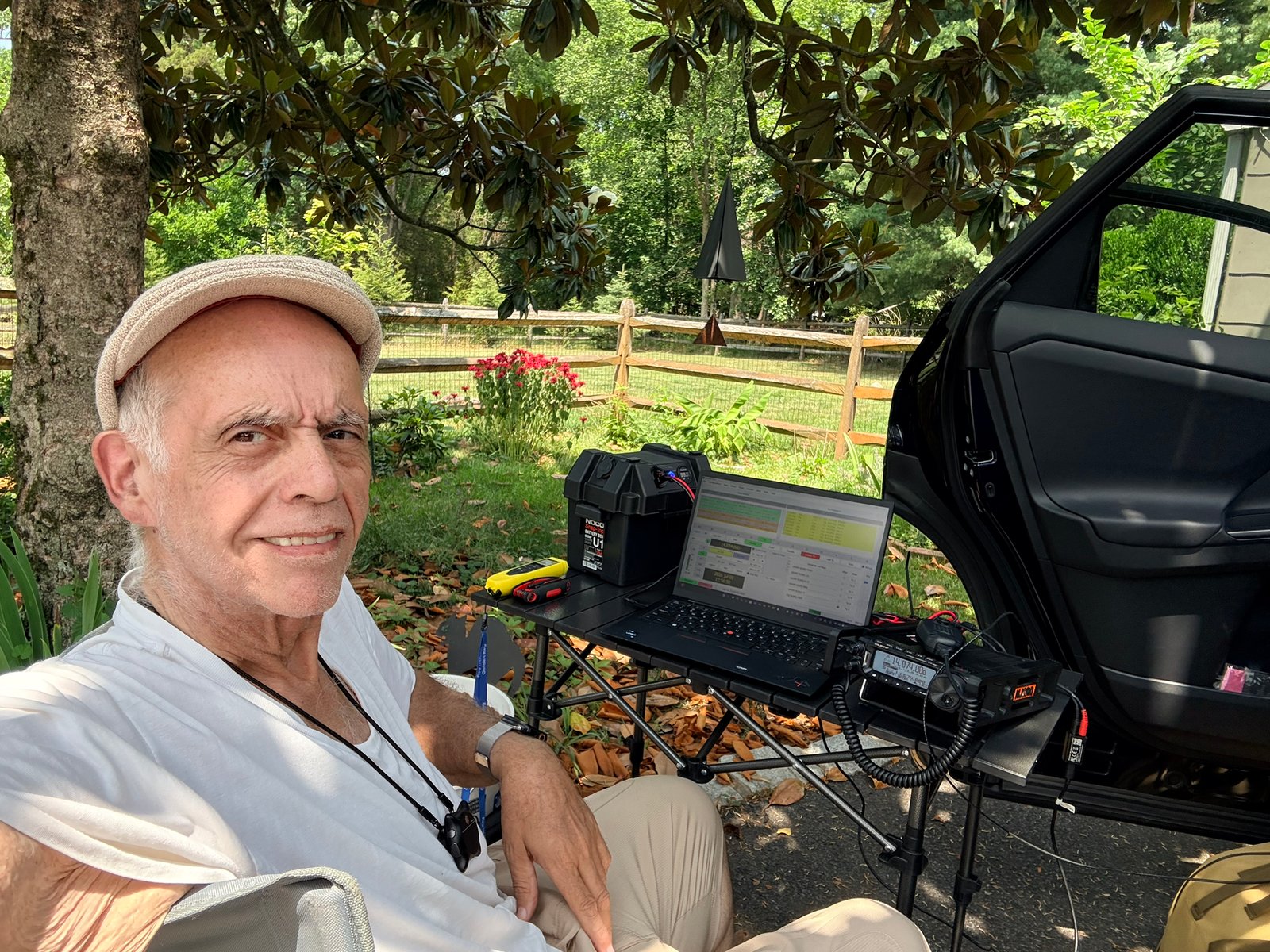
A Tiny Radio With a Huge Frequency Range
Yaesu designed the FT-817 as an all-mode portable transceiver. It covers the 160 through 10 meter HF amateur bands, plus 6 meters, 2 meters and 70 centimeters. It supports SSB, CW, AM, FM, packet and digital operation, with selectable power levels up to 5 watts.
That combination is the reason the radio is still interesting. A lot of portable radios handle HF well. A lot of handhelds cover VHF and UHF. The FT-817 gives you HF, VHF and UHF in one small radio and lets you use more than just FM on 2 meters and 70 centimeters.
Five Watts Changes the Way You Operate
The FT-817 is a QRP radio. Five watts is not 100 watts, and pretending otherwise is a good way to become frustrated.
But QRP can also be a lot of fun. Instead of solving every problem with more transmitter power, you pay more attention to antennas, propagation, operating position, timing and efficiency. A good portable antenna in the clear can make five watts surprisingly effective.
For CW and weak-signal digital work, five watts can go a long way. SSB takes more patience, but contacts are absolutely possible when conditions cooperate.
Why I Like It for Portable Operation
The FT-817 was built around portability. Yaesu listed it at roughly 5.3 inches wide, 1.5 inches high and 6.5 inches deep. It can operate from external 13.8-volt DC power and was also designed for internal battery operation.
For a go bag, campsite, picnic-table station or quick field setup, that small size matters. You are carrying less radio and can spend the weight budget on the things that usually make a bigger difference: battery capacity, coax, antenna wire, mast, tuner and weather protection. For more on sizing field power, see Portable Power for Ham Radio: How Many Amp-Hours Do You Really Need?. For antenna choices, see End-Fed, Vertical or Hamstick? Choosing the Right Portable HF Antenna.
I already use larger portable radios when I want more power, but the FT-817 fills a different role. It is the radio I can bring when the goal is to keep the station small and simple.
HF Is Only Half the Story
One of the strongest reasons to own an FT-817 is the VHF/UHF capability. It is not limited to ordinary FM repeater operation. You can operate SSB and CW on 2 meters and 70 centimeters as well.
That opens the door to weak-signal VHF/UHF work, portable simplex, satellite experimentation and other operating styles that a typical dual-band FM handheld cannot provide.
The radio has both front and rear antenna connectors, and Yaesu allowed antenna selection by band through the menu system. That can be handy in a portable setup where you may want one connection for HF and another for VHF/UHF.
What You Give Up Compared With a Modern Radio
There is no reason to pretend the FT-817 is modern. If you are coming from newer radios, several things will stand out immediately.
- No built-in spectrum waterfall.
- No native USB connection for CAT and digital audio.
- No built-in automatic antenna tuner.
- Small display and menu-driven controls.
- Only 5 watts maximum output.
- Older battery technology in original configurations.
Those are real limitations. For FT8 or other computer-based modes, an external audio/CAT interface is normally the practical route. For non-resonant antennas, you will also need an external tuner.
The BHI DSP Upgrade Is a Nice Bonus
The particular FT-817 I am buying has a BHI DSP noise-reduction upgrade installed by the previous owner. I will evaluate that after I have the radio in hand, but it is a useful extra on a receiver this small, especially when working noisy HF signals.
I am not counting the modification as a reason to push the radio beyond its design limits. Yaesu was very clear that the FT-817 was engineered as a 5-watt radio, and the company specifically warned against trying to turn the transmitter up to 10 watts.
Is $200 a Good Buy?
For me, yes—assuming the radio arrives and performs as described.
At $200, I am getting an all-mode HF/VHF/UHF portable transceiver with the box, manual, accessories and the added DSP modification. That gives me a lot of capability for less than the cost of many new single-purpose radios.
With older equipment, condition matters more than the original list price. I still want to check the controls, display, receiver, transmit output, connectors, battery compartment and accessories before calling any used radio a bargain.
Who the FT-817 Still Makes Sense For
I would still consider the FT-817 a good fit for an operator who wants:
- A compact QRP radio for field operation.
- HF through 70 centimeters in one box.
- SSB and CW capability on VHF/UHF.
- A radio for learning efficient low-power operating.
- A backup or travel station that does not take up much room.
If your priority is a big display, built-in sound card, automatic tuner and 100 watts, this is not the radio to buy. But if you appreciate a small radio that can do an unusually wide range of things, the FT-817 still earns its place.
My Bottom Line
The FT-817 is not impressive because it competes with a modern 100-watt base station. It is impressive because so much radio fits into such a small package.
More than twenty years after its introduction, HF, 6 meters, 2 meters and 70 centimeters with SSB, CW, AM, FM and digital capability in a compact 5-watt transceiver is still a useful combination.
I will do a follow-up after I have spent some time operating this particular radio and can report on its actual condition, the installed BHI DSP and how it fits into my portable station.
Official reference: Yaesu FT-817/FT-817ND legacy information and manuals.
73,
Roger Quintana, NJ2RQ